
Descript AI 2026: Ultimate Audio & Video Editing Guide
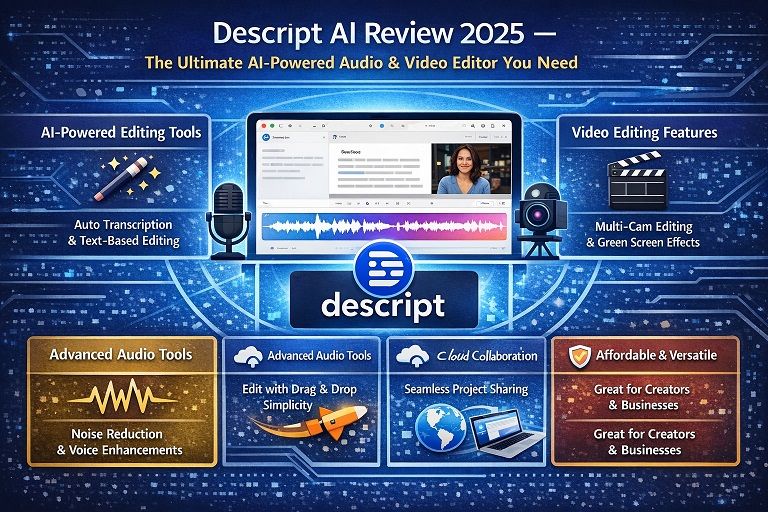 What if editing audio and video felt as simple as editing a Google Doc? In 2026, Descript AI has fully delivered on that promise, becoming one of the most disruptive platforms in the audio and video editing space. Instead of timelines, keyframes, and complex interfaces, Descript lets creators edit media by editing text. For podcasters, YouTubers, marketers, and remote teams, this shift isn’t just convenient—it fundamentally changes how fast content can be produced, refined, and published.
👉 Try Descript AI now and experience text-based editing in action:
Why Descript AI Stands Out in 2026
Traditional audio and video editors were built for professionals with years of experience. Descript was built for speed, clarity, and scale. In 2026, the platform has evolved into a complete AI-powered audio and video editing suite, combining transcription, editing, voice cloning, screen recording, and collaboration into one unified workflow.
What makes Descript different is not just automation, but the way it reframes editing itself. Instead of cutting waveforms or trimming clips manually, you simply delete words from a transcript—and the corresponding audio or video disappears instantly. This approach removes the technical friction that slows down creators and replaces it with a writing-first mindset.
Text-Based Editing: The Core Innovation
At the heart of Descript AI is its text-based editing engine. When you upload or record content, Descript automatically transcribes it with high accuracy. That transcript becomes your editing canvas. Remove filler words, tighten sentences, or restructure entire segments by editing text, and the media updates in real time.
This workflow is especially powerful for podcasts, interviews, tutorials, and talking-head videos where clarity and pacing matter more than cinematic effects. In 2026, Descript’s transcription accuracy and real-time syncing feel almost invisible, allowing creators to focus on storytelling instead of tools.
AI Voice Tools That Change the Game
Descript’s AI voice features are among its most talked-about capabilities. With Overdub, creators can generate realistic voice replacements using their own voice or a synthetic AI voice. This means fixing mistakes, adding missing lines, or updating scripts without re-recording entire sessions.
For teams and businesses, this unlocks a new level of flexibility. Updates that once required scheduling recording sessions can now be handled instantly, making Descript ideal for evergreen content, product walkthroughs, and educational materials that need frequent updates.
Video Editing Without the Pain
In 2026, Descript has matured into a serious video editing tool, especially for creators focused on clarity and speed rather than cinematic effects. You can edit video by editing dialogue, remove awkward pauses automatically, and even generate captions optimized for social platforms.
The platform also includes built-in screen recording, making it ideal for tutorials, SaaS demos, and onboarding videos. Everything lives in one place—from recording to editing to exporting—removing the need to juggle multiple tools.
Collaboration Built for Modern Teams
Descript AI is designed for collaboration. Multiple team members can comment, edit, and refine content within the same project, similar to collaborative document editing. This makes it particularly effective for remote teams, agencies, and content operations where speed and alignment matter.
Instead of long feedback loops and exported drafts, teams work directly on the source file, reducing miscommunication and accelerating publishing timelines.
Real-World Use Cases That Drive Adoption
Descript is widely used by podcasters who want to cut editing time dramatically while maintaining professional audio quality. YouTubers rely on it for fast dialogue-driven edits and caption-ready exports. Marketers use Descript to repurpose long-form content into short clips for LinkedIn, YouTube Shorts, and internal communications.
Educators and coaches benefit from the ability to refine lessons without re-recording, while SaaS teams use Descript to create product walkthroughs that stay up to date without constant reshoots.
Where Descript AI Has Limits
Descript is not designed for heavy cinematic editing or complex visual effects. If your workflow depends on advanced color grading, layered animations, or film-level production, traditional editors may still be necessary. However, for the majority of content-driven use cases, Descript’s speed and simplicity outweigh those limitations.
Its strength lies in communication-focused media, not visual spectacle—and that’s exactly why it continues to grow in popularity.
Final Verdict: Is Descript AI Worth Using in 2026?
Descript AI is no longer just a clever idea—it’s a mature, reliable platform redefining how audio and video content is edited. By turning editing into a writing-first experience, it removes barriers that once limited content production to specialists.
For creators, teams, and businesses that value speed, clarity, and scalability, Descript AI is one of the smartest tools you can add to your workflow in 2026.
👉 Start editing audio and video like text today:
FAQ — Conversion-Focused
What is Descript AI best used for?
Descript AI is best for editing podcasts, interviews, tutorials, and dialogue-driven videos using text-based editing instead of traditional timelines.
Can beginners use Descript without editing experience?
Yes. Descript is designed for non-editors, allowing users to edit audio and video by editing text, making it accessible even for complete beginners.
Does Descript replace traditional video editors?
For content focused on speech, education, and marketing, Descript can fully replace traditional editors. For cinematic projects, it works best as a complementary tool.
Is Descript good for teams and collaboration?
Absolutely. Descript supports real-time collaboration, comments, and shared editing, making it ideal for remote teams and agencies.
Can Descript fix mistakes without re-recording?
Yes. With AI voice tools like Overdub, users can correct or add lines without re-recording, saving significant time.